
Here's a sobering statistic: organisations lose up to 9% of annual revenue due to poor contract management practices, according to World Commerce & Contracting (2023). That's not a rounding error, it's a massive leak that most businesses don't even realise they have.
The culprit? A scattered, manual approach to managing contracts from start to finish. When contract processes lack structure, teams waste time searching for documents, miss critical deadlines, and expose their organisations to unnecessary risk.
A robust contract lifecycle management (CLM) process changes all that. It transforms contracts from administrative burdens into strategic assets by streamlining workflows, improving visibility, and ensuring every agreement delivers on its objectives.
Let's break down the contract lifecycle into phases that actually make sense.
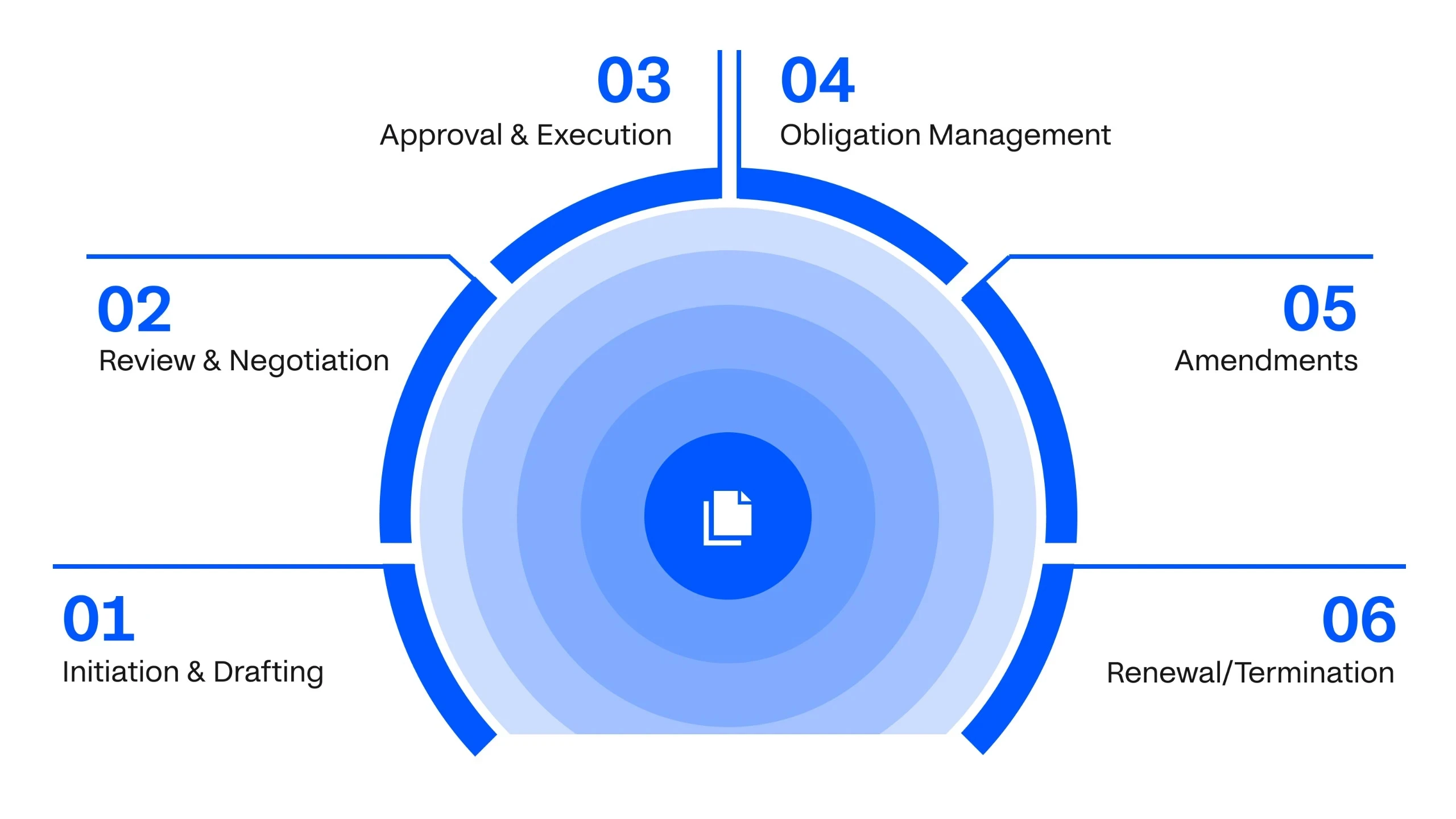
Phase 1: Getting Started Right
The first phase sets the foundation for every contract. It covers how agreements are initiated, drafted, reviewed, negotiated, and approved; transforming ideas into compliant, executable documents that align legal precision with business goals.
Initiation & Drafting
Every contract starts with a business need - securing a supplier, onboarding a partner or closing a client deal. But here's where things typically go wrong: weak initiation leads to unclear terms, missed requirements, and compliance risks that ripple through the entire lifecycle.
The problem compounds during contract drafting. Without pre-approved templates or intelligent guidance, teams either start from scratch (wasting hours) or copy-paste from outdated documents (creating risk). Errors and inconsistencies at this stage expose organisations to disputes and financial loss later.
Miramis (formerly Pocketlaw) solves this by centralising intake requests through structured forms and intelligent templates. Teams capture key data from the outset, route requests to the right people, and create high-quality contracts in minutes using PLAI, our legal AI assistant. Pre-approved templates and smart clause suggestions ensure accuracy and compliance without the manual bottleneck.
Internal Review & Negotiation
Once drafted, contracts move through multiple teams such as legal, finance, procurement, and operations. Sound familiar? Version confusion, endless email chains, and approval delays turn what should be quick reviews into week-long ordeals.
Then comes contract negotiation: the balancing act between legal protection and commercial opportunity. Without real-time visibility and accurate version tracking, organisations risk losing control of terms or agreeing to unfavourable clauses.
Miramis enables real-time collaboration within a single platform. Teams can redline, comment, and approve in a shared environment. Counterparties can negotiate directly and securely, while built-in audit trails provide transparency across every edit. No more "latest_final_v3_ACTUAL.docx".
Approval & Execution
Contracts often stall at the finish line. Manual workflows and unclear responsibilities mean delayed approvals, which halt deals, increase costs, and introduce compliance risk.
Miramis automates approval workflows based on contract value, department, or risk level. Role-based permissions ensure the right stakeholders sign off before execution. Integrated e-signature capabilities let contracts get executed instantly, with automatic storage in a central repository and complete execution logs.
The result is faster approvals with complete control.
Phase 2: The Active Contract
Once executed, the focus shifts from signing to managing. This phase ensures that obligations are met, performance is tracked, and any changes are controlled—turning signed documents into living agreements that deliver measurable value.
Obligation Management & Performance Monitoring
Here's where most organisations drop the ball. Once a contract is signed, it disappears into a folder somewhere. Teams forget about deliverables, miss payment milestones, ignore SLA commitments, and wake up when something goes wrong.
Failing to manage these obligations results in penalties, disputes, and reputational harm. Even worse? Missing the opportunity to track whether contracts are actually delivering value.
According to Deloitte (2024), companies with data-driven contract performance reviews achieve a significantly higher value realisation from their agreements. That's the difference between contracts that work for you and contracts that just exist.
Miramis automatically surfaces key dates, obligations, and renewal triggers. Custom dashboards provide visibility into commitments, while centralised analytics enable teams to monitor contract performance in real time. No more oversight, no more guesswork, just accountability.
Amendments & Change Management
Contracts evolve. Scope changes, regulatory updates, pricing adjustments, all require amendments. Without proper control, versioning becomes chaotic and legal risks multiply.
Miramis offers structured amendment workflows with full clause history tracking. Every change is logged with timestamps and author details, creating a transparent audit trail. Teams can manage changes confidently while preserving contractual integrity.
Phase 3: Lifecycle Decisions
The final phase determines how each contract evolves. It involves assessing performance, managing contract renewals or amendments, and making data-driven decisions about continuation or closure—ensuring no opportunity or risk goes unnoticed.
Renewal, Extension, or Termination
As contracts near expiration, organisations face a critical decision: renew, renegotiate, or terminate. If you miss the deadline, you might be stuck with auto-renewals, unnecessary costs, or unfavourable terms you didn't even realise you'd agreed to.
This is where poor contract management becomes painfully expensive. Missed renewal dates, lost leverage in negotiations, and continued relationships with underperforming vendors, all because nobody was tracking what was coming up.
Miramis automates renewal alerts and recommends actions based on contract performance and risk profiles. Teams receive timely reminders and can renew contracts directly within the platform. No opportunity or obligation gets missed.
The Bottom Line: Integration Matters
Managing contracts manually across these phases creates inefficiencies, silos, and compliance risks. Different teams use different tools, documents live in different places, and nobody has a complete picture of what's happening.
A modern CLM platform like Miramis (formerly known as Pocketlaw) transforms this chaos into a single, connected workflow. Legal and business teams get visibility, control, and confidence from initiation to renewal.
By combining automation, AI-powered insights, and secure collaboration, Miramis helps organisations reduce legal risk, speed up deal cycles, and unlock greater value from every agreement.
The 9% revenue leak? Consider it plugged.
Ready to transform your contract lifecycle?
Streamline every stage, from request to renewal, with Miramis' all-in-one CLM platform. Empower your teams to work faster, stay compliant, and close deals with confidence.
Book a demo to see how Miramis can modernise your contract management process and drive smarter, faster business decisions.

Disclaimer:
Please note: Miramis is not a substitute for an attorney or law firm. So, should you have any legal questions on the content of this page, please get in touch with a qualified legal professional.
Related articles

Aleatory Contracts Explained: Types and Industry Use Copy
An aleatory contract is a binding agreement where obligations and benefits depend on uncertain future events, like insurance or gambling contracts.

10 ChatGPT Use Cases for Lawyers & Legal Teams
Discover how ChatGPT enhances legal research, drafting, and compliance while understanding its limitations and the best ways to use AI effectively in legal practice.

Executed Contracts: From Signing to Management
Executed contracts are legally binding agreements signed by all parties, confirming terms and ensuring smooth business transactions and partnerships.