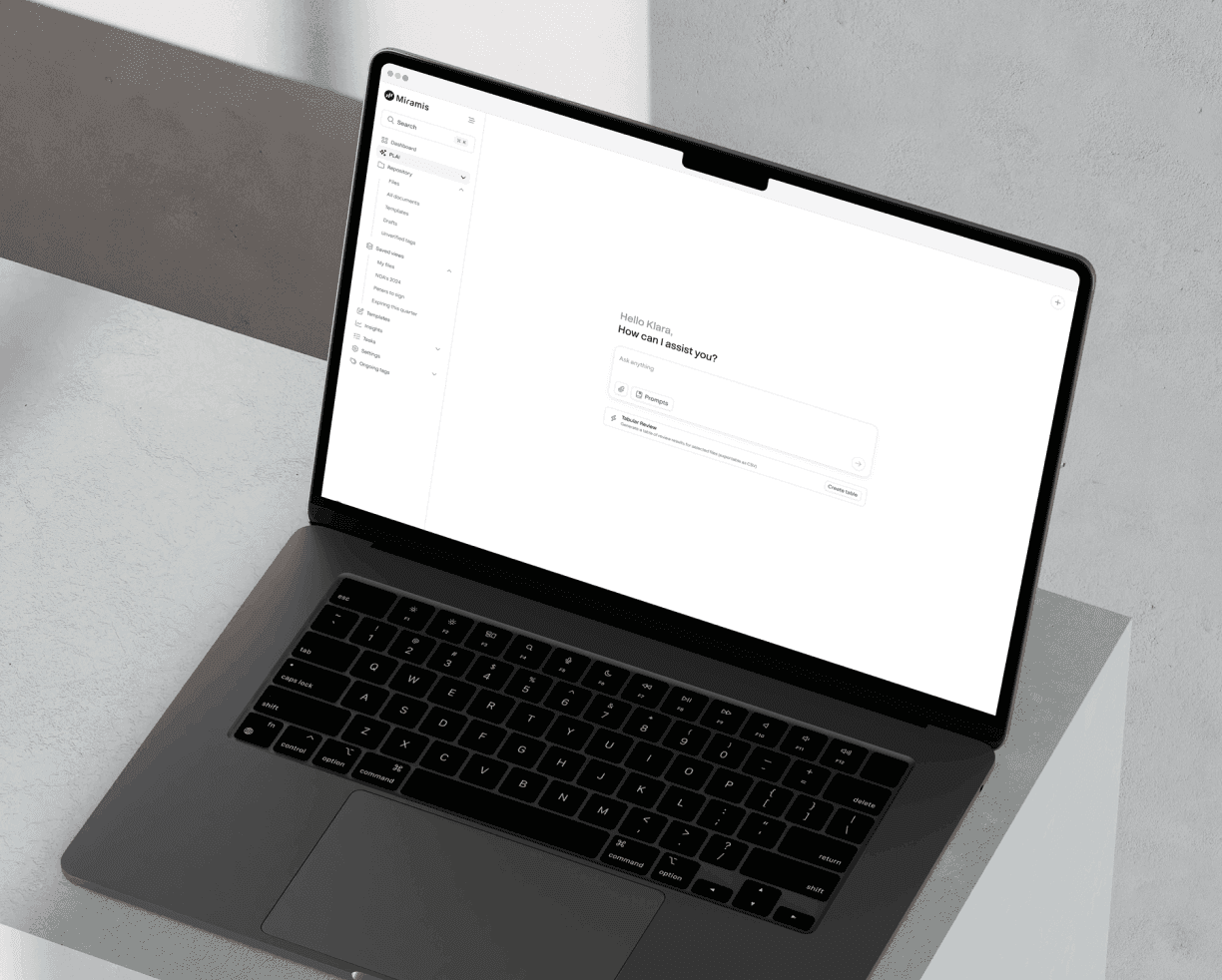







Both Miramis and Precisely are EU-hosted, end-to-end contract management platforms designed to let business teams handle contracts independently within legal-defined guardrails. The differences sit in AI depth, repository intelligence, and how quickly teams can configure and adopt the platform.
Feature
Miramis
Precisely
Core Functionality
Full contract lifecycle
✓
✓
Browser-based editor
✓
✓
Microsoft Word add-in
✓
Limited
Pre-approved templates
✓
✓
Questionnaire-based template creation
✓
✓
Self-serve template setup
✓
Limited
Conditional logic in templates
✓
✓
AI Capabilities
AI contract review against playbook
✓
✗
AI metadata extraction
✓
Limited
✓
✗
✓
✗
✓
✗
Natural language Q&A across contracts
✓
✗
AI-generated reports and dashboards
✓
Limited
Workflow & Collaboration
✓
✓
✓
✓
External negotiation workspace
✓
✓
Internal commenting and redlining
✓
✓
✓
✓
eSigning
Native eSigning included
✓
✓
eIDAS-compliant
✓
✓
BankID / MitID support
✓
✓
DocuSign integration
✓
✓
Multiple signing methods on one document
✓
Limited
Repository & Post-Sign
Intelligent contract repository
✓
Limited
Obligation and renewal tracking
✓
✓
✓
Limited
Custom filtered views (saveable)
✓
✓
Plain-language portfolio queries
✓
✗
Integrations
Salesforce
✓
✓
HubSpot
✓
✓
SharePoint
✓
✓
WebAPI / REST API
✓
✓
Security & Compliance
ISO 27001
✓
✓
SOC 2
✓
Limited
European data residency
✓
✓
SSO / SAML
✓
✓
Advanced role-based permissions
✓
✓
Implementation & Support
AI-powered implementation
✓
✗
Dedicated customer success
✓
✓
Self-serve setup possible
✓
Limited
What users report
Miramis approach
AI capabilities beyond metadata tagging
Precisely
Miramis
Template and platform learning curve
Precisely
Miramis
Repository intelligence
Precisely
Miramis
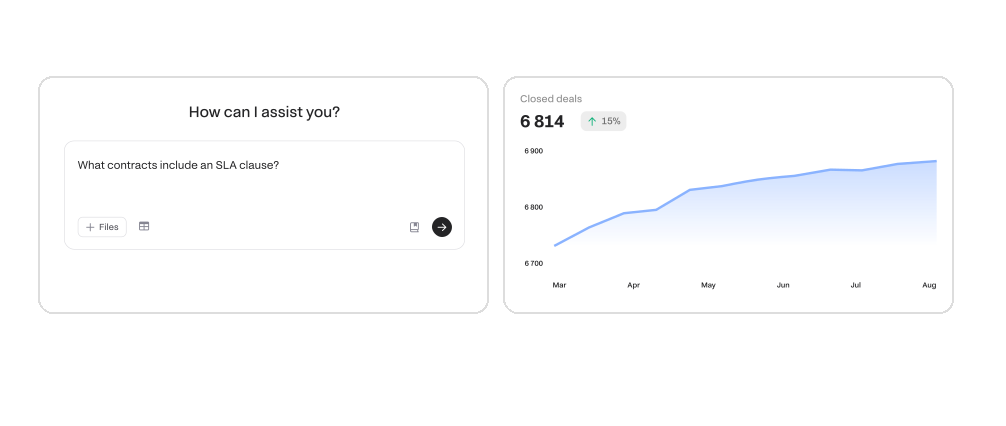
A Contract Agent, Not Metadata Assistance
The defining difference between Miramis and Precisely is what AI actually does. Precisely's AI capabilities centre on metadata tagging and third-party document handling - useful, but limited in scope. Miramis is built around PLAI, an AI contract agent trained on your company's own contract data, playbooks, and standards.
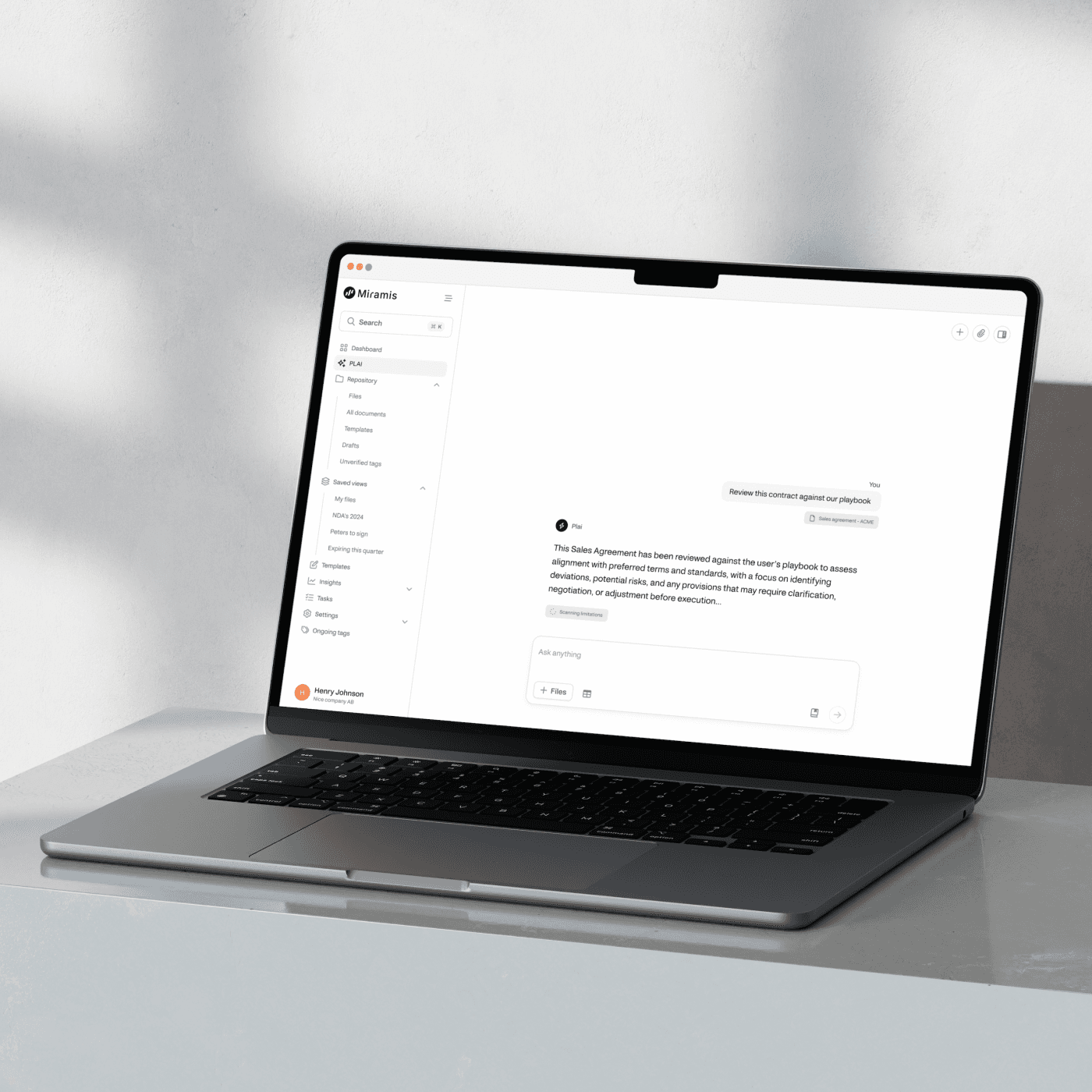
PLAI reviews every contract against your playbook, telling business teams what they can approve, suggesting alternative wordings for flagged clauses, and identifying what needs escalation. It routes approvals automatically based on your Delegation of Authority - no manual chasing. It analyses thousands of agreements simultaneously with tabular output, compares clauses across portfolios, and surfaces risks across the entire archive. And it answers natural language questions about your contract portfolio in plain language - obligations, renewals, risk exposure - in seconds.
This is not AI as a feature within a CLM. This is AI as the engine that powers every workflow.
Self-Serve Setup Without the Services Dependency
Precisely is well-regarded for its customer success team - and the platform often requires that team to build initial templates as part of the implementation package. That works, but it creates a dependency that slows adoption and limits self-serve scaling.
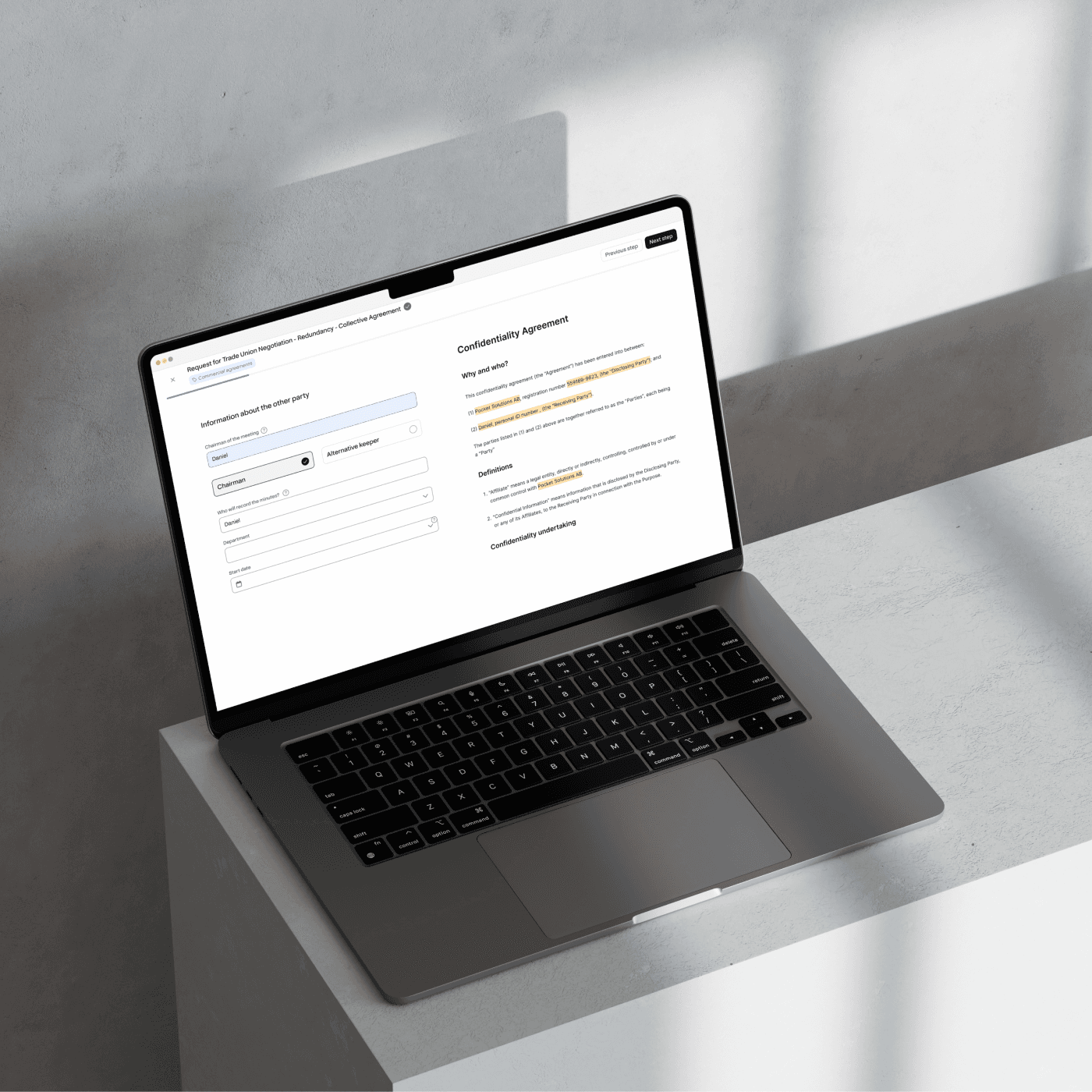
Miramis is built for self-serve template configuration from the start. AI-powered implementation handles bulk legacy contract import, automatic metadata extraction, and template suggestions. The questionnaire-based template builder works without vendor handholding for most use cases. When you need to build a new template, add a clause, or adjust workflow logic, your team does it - not the vendor's services team.
For organisations scaling contract operations across departments, this matters. Self-serve setup means you can iterate faster, deploy to new teams without project work, and avoid the bottleneck of waiting for vendor capacity.
Every Contract, Queryable in Plain Language
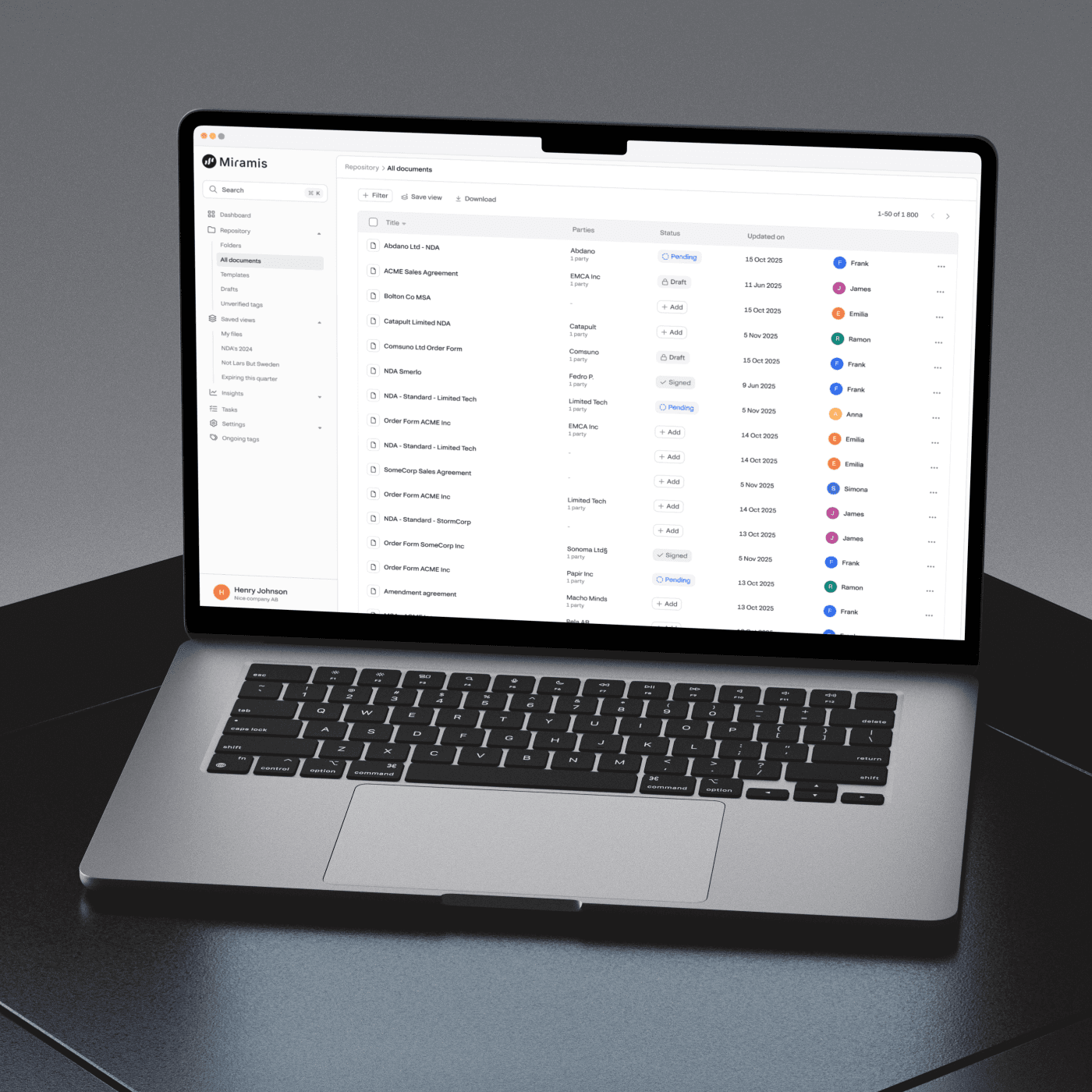
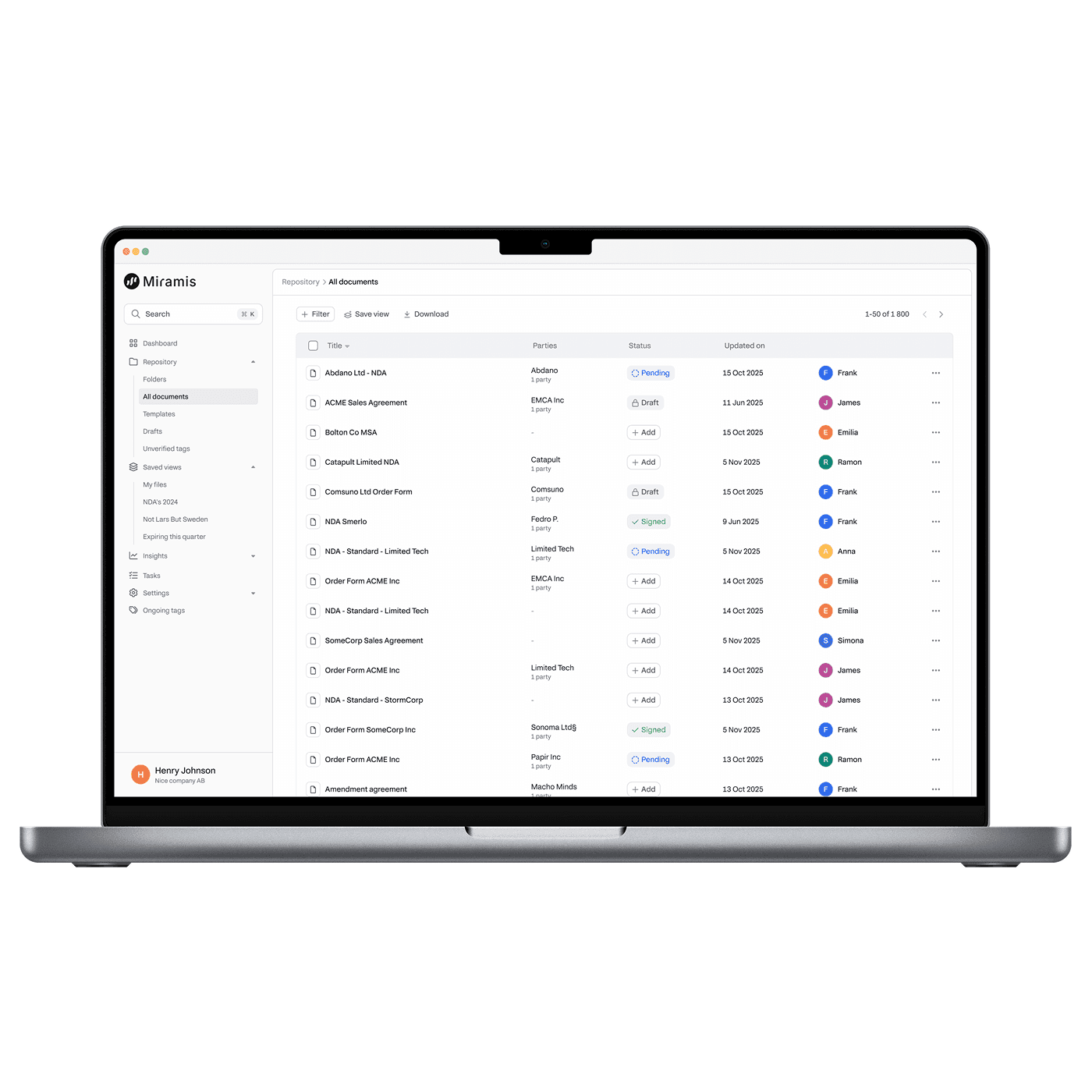
Both Miramis and Precisely have strong contract archives. The difference is what happens after a contract is in the system. In Precisely, finding information means filtering, searching by metadata, and navigating folders. In Miramis, you ask a question.
PLAI turns the entire repository into interactive intelligence. "Which contracts auto-renew before December?" "Which agreements have a non-standard limitation of liability clause?" "What's our total exposure to MFN clauses across the portfolio?" Get the answer in seconds. Save custom filtered views like "Auto-renewals expiring before December 2027" for one-click access. Export to CSV for reporting. Track every obligation, renewal, and termination window with automated reminders.
For legacy contracts, the difference is even more significant. Bulk-upload thousands of historical agreements and PLAI automatically extracts metadata, tags every document, and makes the entire archive fully searchable - in minutes, not months.
Contract Management for Sales, HR, Legal, Procurement, and Finance
Both platforms position themselves as serving the whole business. The architectures that make this work are similar at a high level - guardrails set by legal, self-serve workflows for business teams, automated approval routing.
Miramis differentiates on depth of integration with the tools each team uses. Sales gets contracts created and managed directly in HubSpot or Salesforce, with deal data flowing automatically into templates. HR issues offer letters and employment contracts with manager-level commercial input and legal control of legal terms. Procurement manages vendor agreements with full obligation tracking and AI-powered risk surfacing. Finance gets real-time dashboards on contractual commitments, generated by PLAI in natural language.
The Delegation of Authority model means the system automatically identifies required approvals and signatories based on company policy, routes them to the right people, and maintains a full audit trail.























Enterprise-Ready from Day One
Built for enterprise security review. Your data is never used to train AI models.
ISO 27001
SOC 2
GDPR-native
eIDAS-compliant
SSO / SAML
European data residency